
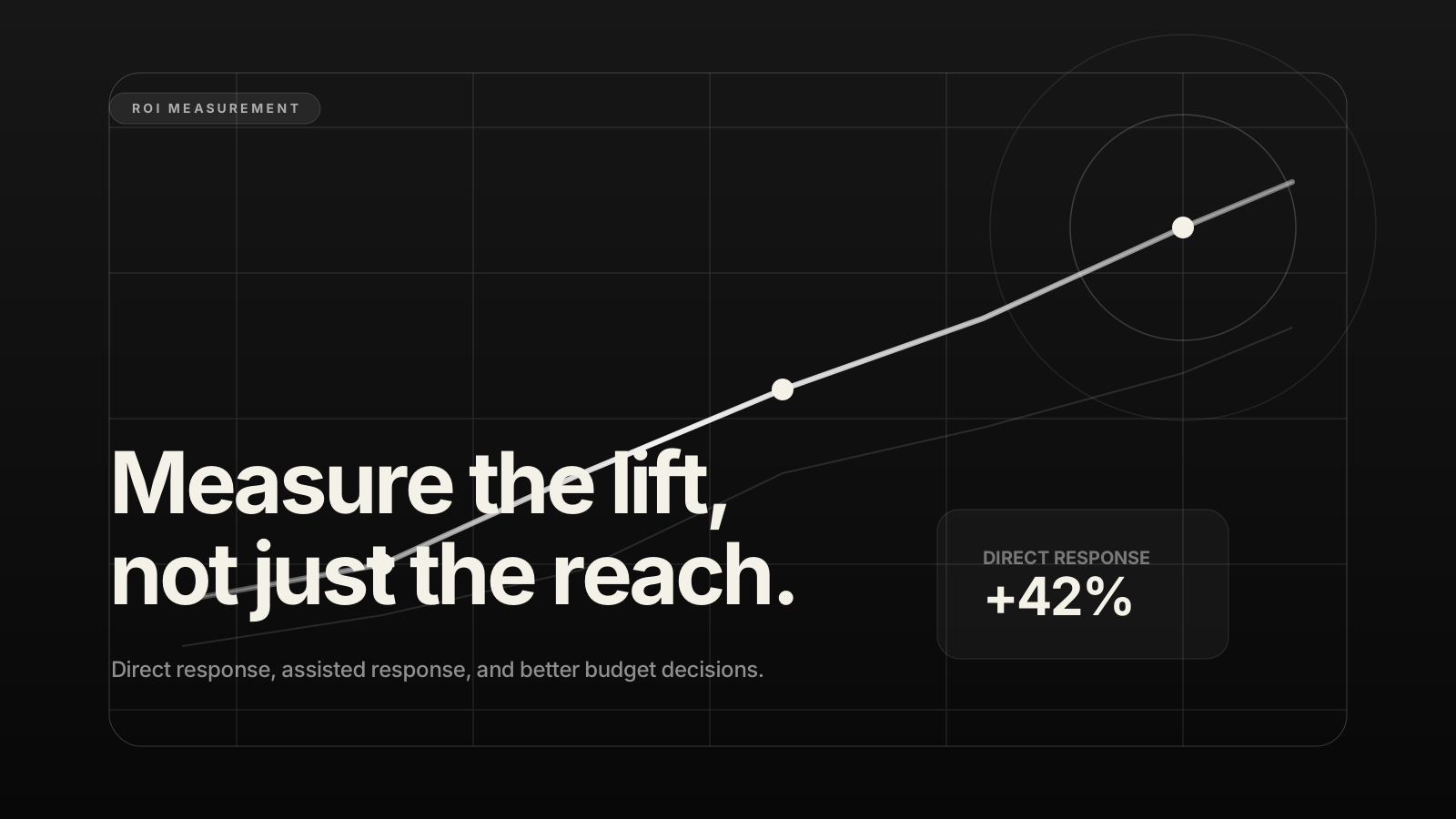
If the only post-campaign answer is "we got good reach," the measurement model was weak before the first creator was ever briefed. Creator marketing is not hard to evaluate because the channel is mysterious. It is hard to evaluate because many teams launch without defining what success should look like at their current stage.
AI startups can avoid that trap by measuring creator work against the real job of the campaign: awareness with the right audience, traffic from qualified interest, lift in branded search, better sales conversations, or direct activation. Not every creator campaign should be forced into the same dashboard.
Choose the outcome before you choose the metric
A campaign aimed at category awareness should not be judged with the same strictness as a campaign built for demo bookings. Likewise, a launch meant to validate messaging should not be scored only on immediate sign-ups. The business question comes first. The metric follows.
For AI startups, this matters because products often sit between education and conversion. Some offers need a creator to build understanding before the audience is ready to act. A weak measurement model ignores that and under-values the role of narrative.
Separate direct response from assisted response
Direct response is the clean part: trackable clicks, trials, demos, or purchases tied to specific creators or campaign windows. Assisted response is broader but still useful: branded search lift, better close-call context, inbound mentions, higher-quality traffic, or recurring talking points that enter the market conversation.
If you only count direct response, you may miss why a creator campaign helped sales. If you only count assisted response, you may avoid accountability. Good reporting keeps both views in the same frame.
- Use unique links or landing pages where the journey supports it.
- Compare time windows around publication dates for branded search and direct traffic.
- Log sales or demo team feedback when prospects reference creators directly.
Treat YouTube and X as different performance layers
YouTube often carries stronger conversion assist because the content can educate, compare, and stay discoverable over time. X is often faster at driving immediate conversation, secondary traffic waves, and narrative spread among operators, founders, and media-adjacent accounts.
That means the reporting model should respect the role of the channel. A long-form YouTube walkthrough may deserve a longer attribution window. A timed X push may be best read through engagement quality, click bursts, and how well it amplified the core asset.
Keep reporting simple enough to use
A reporting system that nobody trusts is worse than a smaller one that gets used. Most AI startups need one operating sheet, one narrative summary, and one next-step decision. The goal is to learn which creators, angles, and formats deserve the next budget cycle.
Overbuilt dashboards create a false sense of rigor. Simple reporting with clear decisions creates actual iteration.
- Track campaign objective, creators used, assets published, traffic, conversions, assisted signals, and qualitative notes.
- Summarize what worked, what underperformed, and what should change next.
- Finish every report with a scale, refine, or stop decision.
Know when the signal is strong enough to scale
Scaling creator marketing should happen after repeated signal, not after one attractive screenshot. If two or three creators with similar audience profiles produce strong click quality or clear narrative lift, that is a better reason to expand than one big top-line outcome from a mismatched channel.
The most valuable result of measurement is not retrospective proof. It is better future allocation. When the numbers and the qualitative read agree, the next campaign gets smarter.
Key takeaway
Creator ROI for AI startups becomes much easier to read when every campaign is tied to one business job, direct and assisted response are tracked separately, and each report ends with a clear allocation decision.
Related reading
Tools
Best AI Marketing Tools for Creator Campaigns in 2026
The useful question is not which AI tool is best. It is which tool removes the weakest step in your creator marketing workflow without adding another disconnected dashboard.
Creator Lists
Biggest Social Media Influencers in August 2026
Cristiano Ronaldo, Khaby Lame, MrBeast, and Elon Musk lead the largest individual audiences by platform—but reach alone is not a creator strategy.
Need help running this properly?
Contact InfluencersX if you need creator sourcing, rollout support, or a cleaner performance readout.